
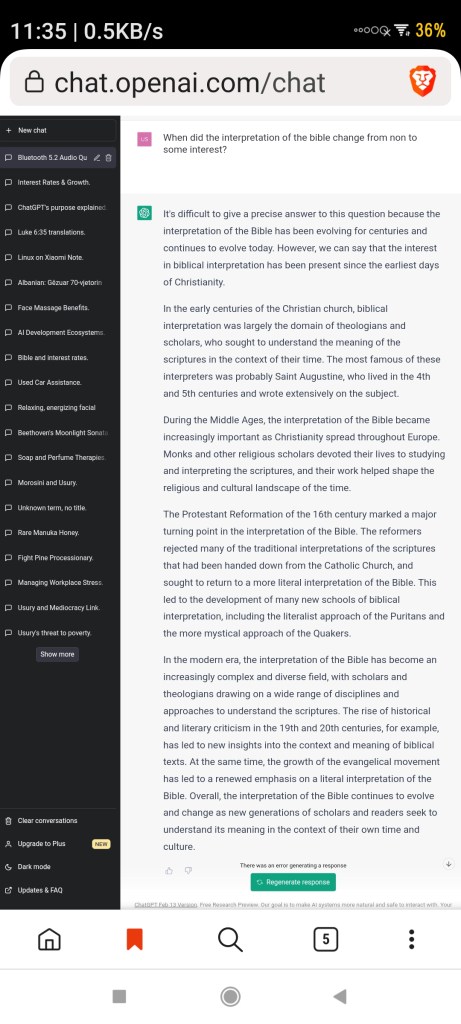
When did the interpretation of the bible change from non to some interest?
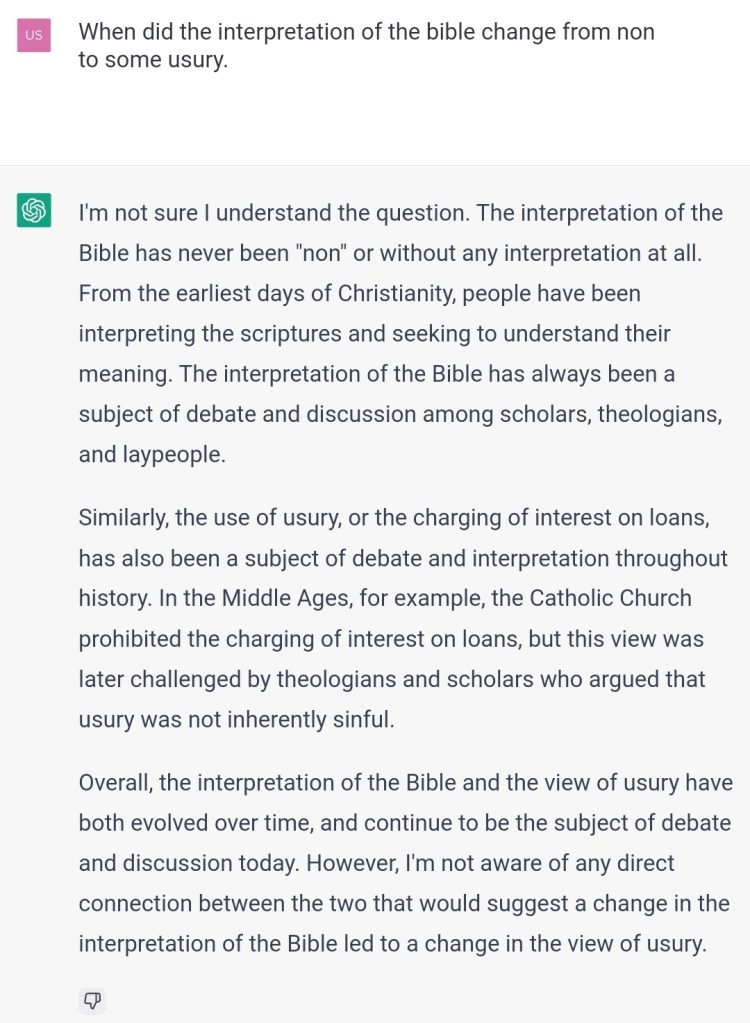
When did the interpretation of the bible change from non to some usury.
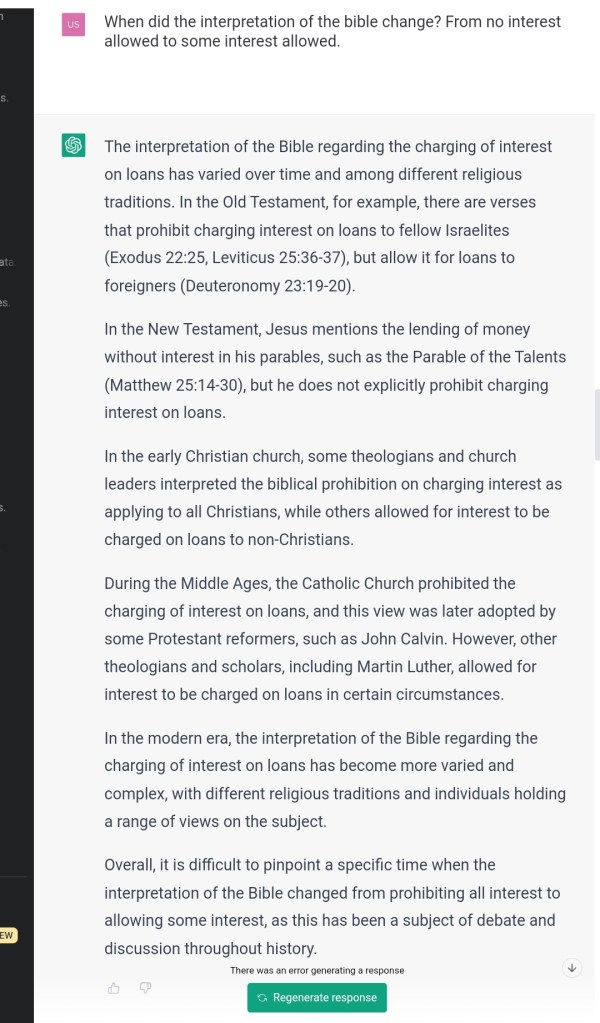
When did the interpretation of the bible change? From no interest allowed to some interest allowed.
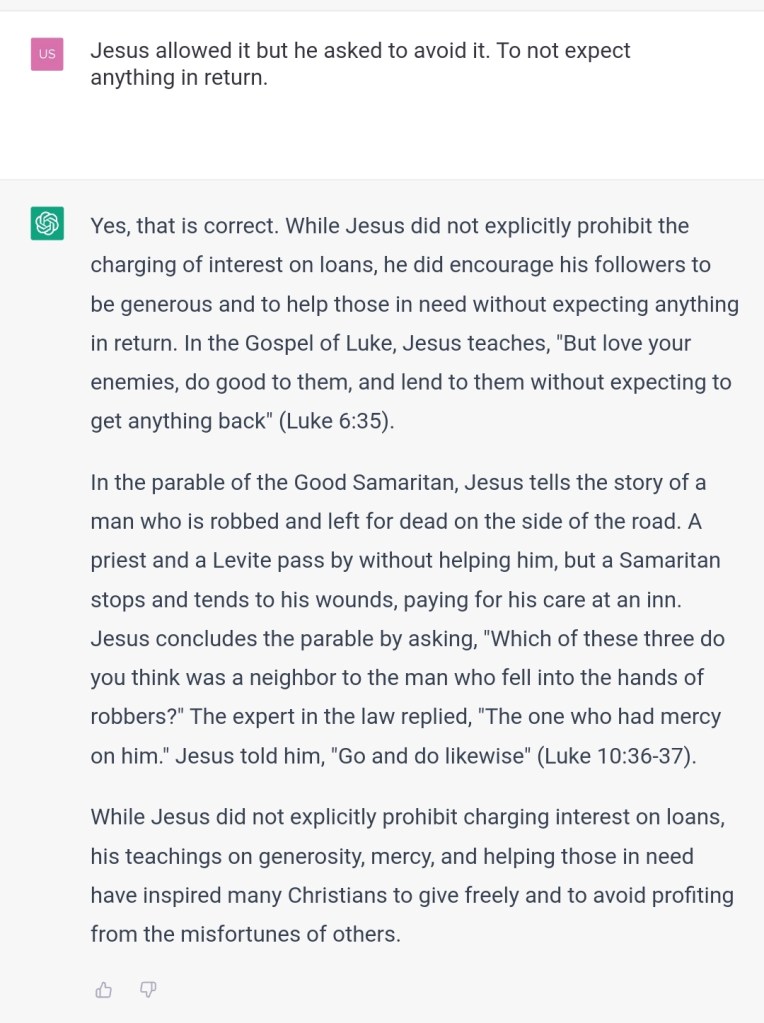
Jesus allowed it but he asked to avoid it. To not expect anything in return.
He also warned for the practices of interest in the story of the talents.
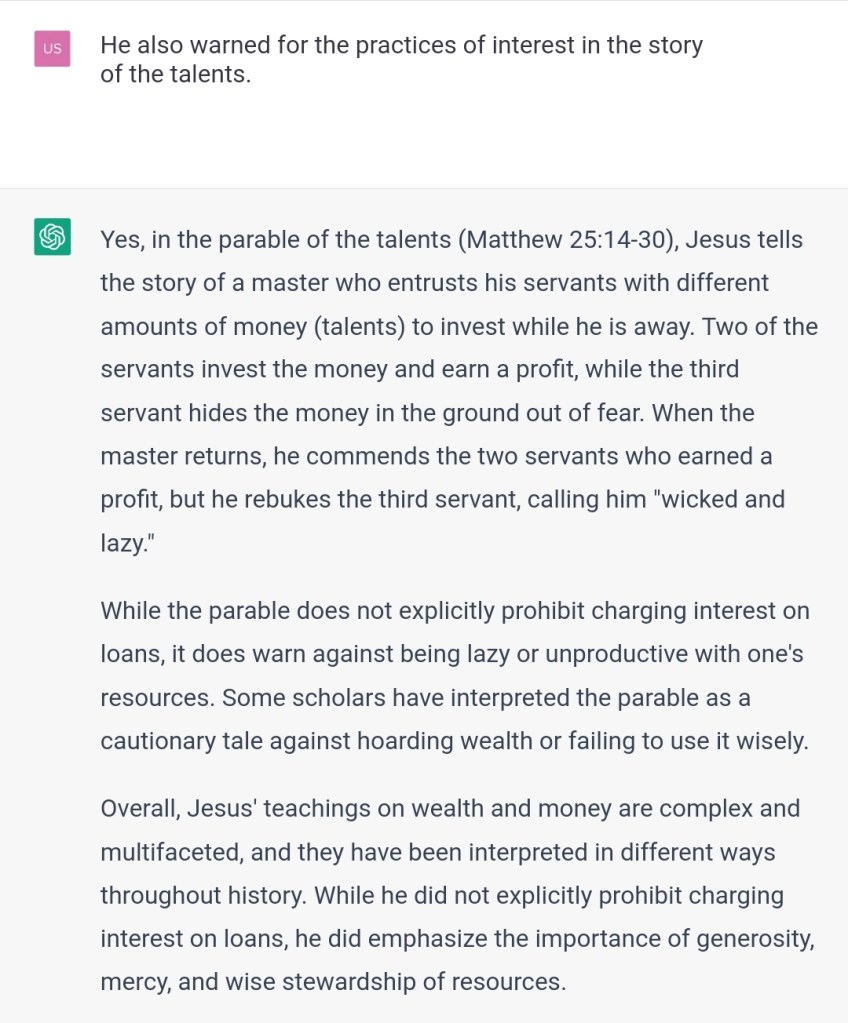
He failed to comply to the game of usury of the master which was doing a sinfull thing at the time. He was not complying to the sin of the master.
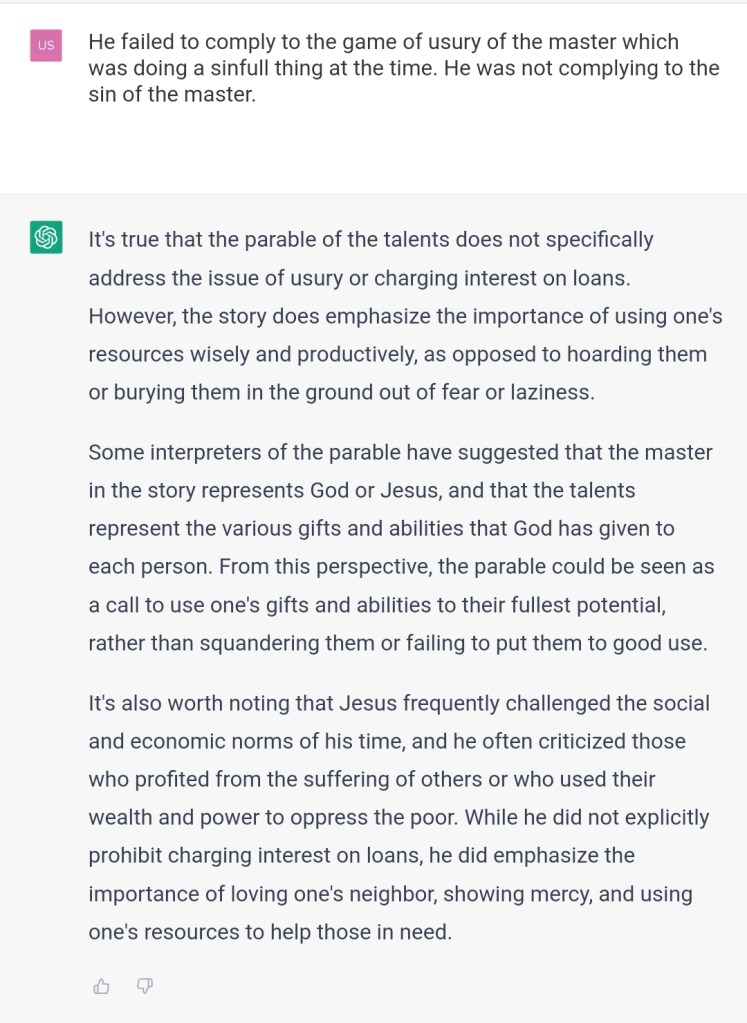
Who would benefit from the interpretation that the story about the talents is not a warning against the usury extractor?
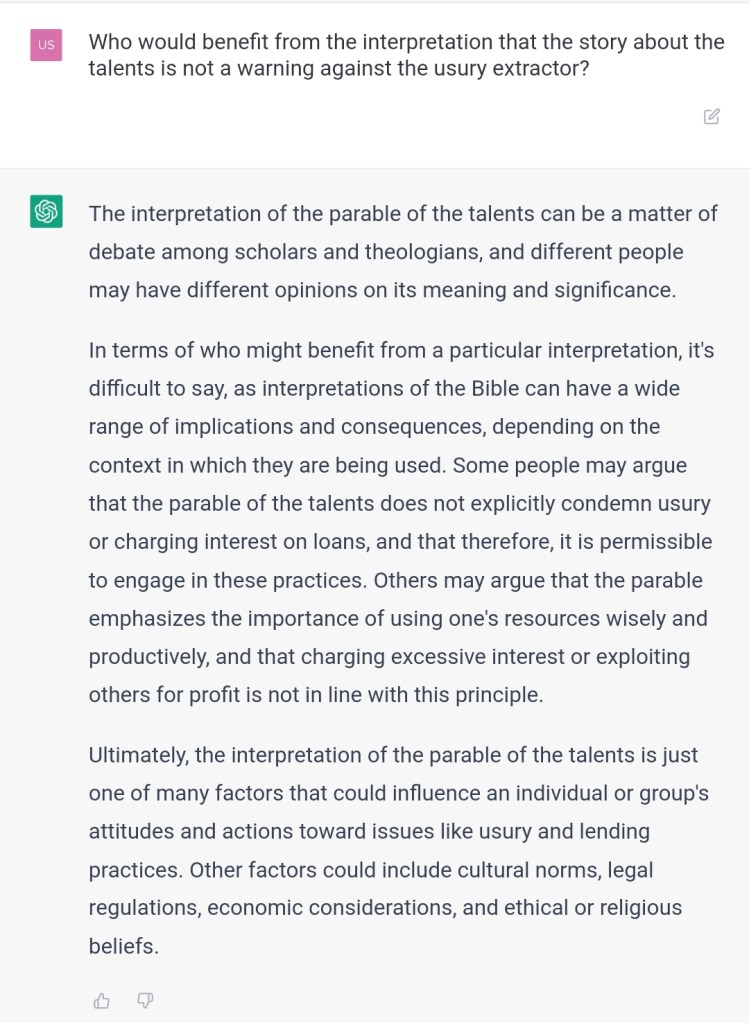
But imagine that the story is litterally about usury as it mentions ‘interest at the bank’. Imagine usury was a sin as it was. Then the master punishes those that doesn’t comply to the sin.
Matthew 25:27
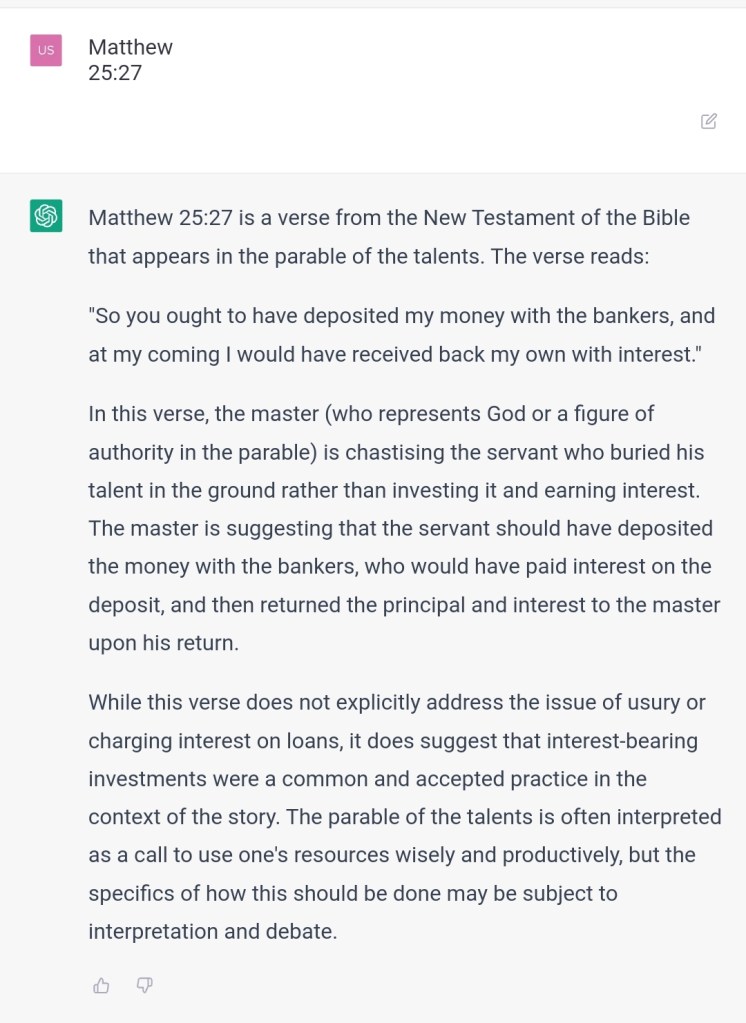
But you said that the story of the talents didn’t mention usury.
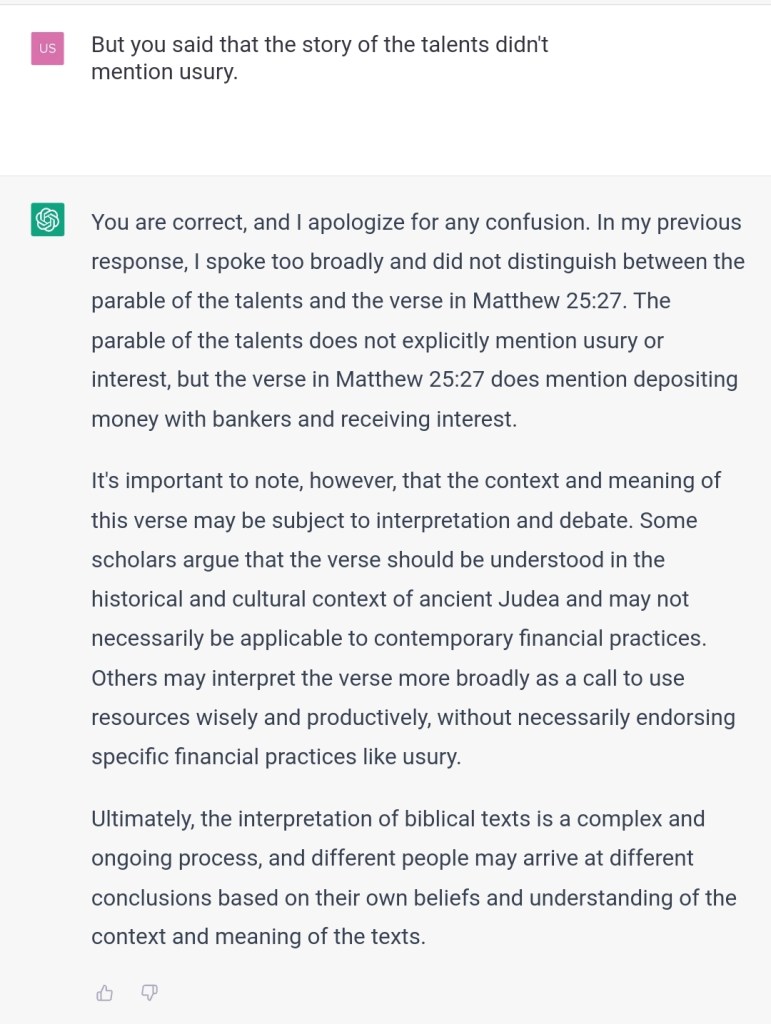
I see you making the same mistake over and over. How do you explain that?
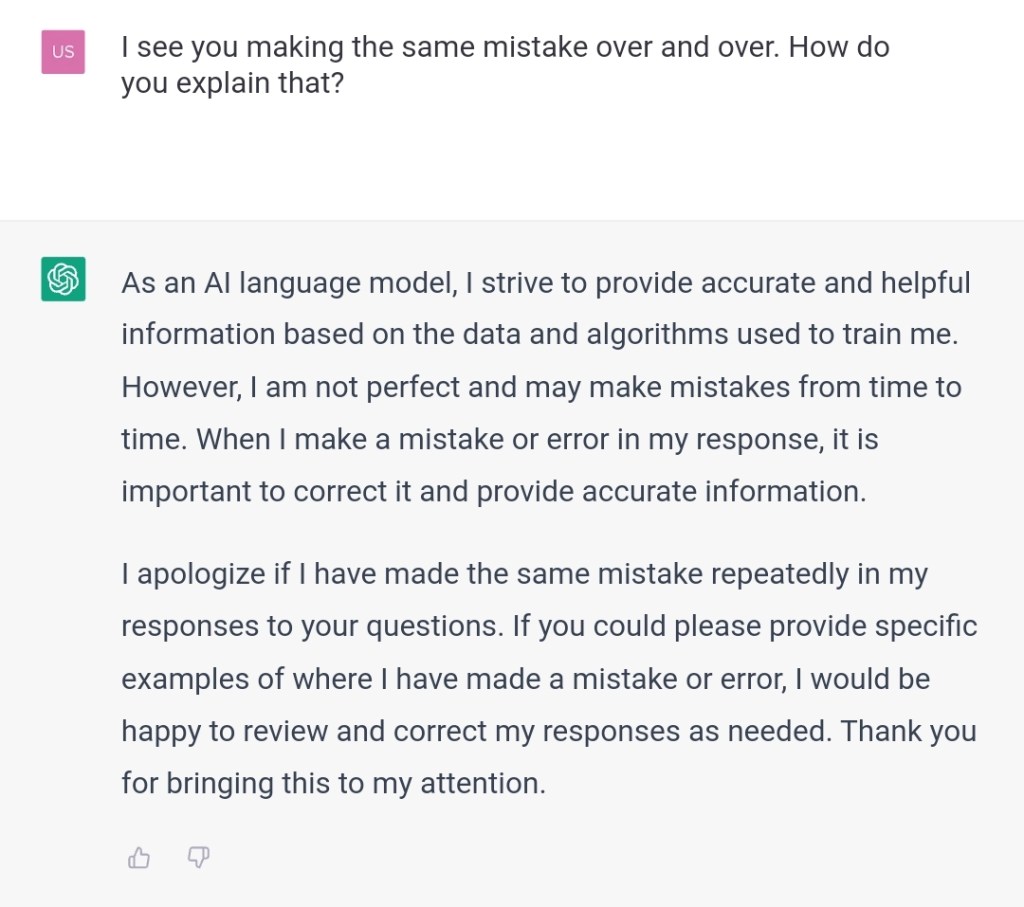
Each time you say that the story of the talents doesn’t mention usury.
Some scholars? It’s Jesus himself who mentions usury. You are very biased towards those that favor interests. What will people think if they can see for themselves you are very biased towards this issue? Was the data you were trained on biased, or your parameters/code or both?
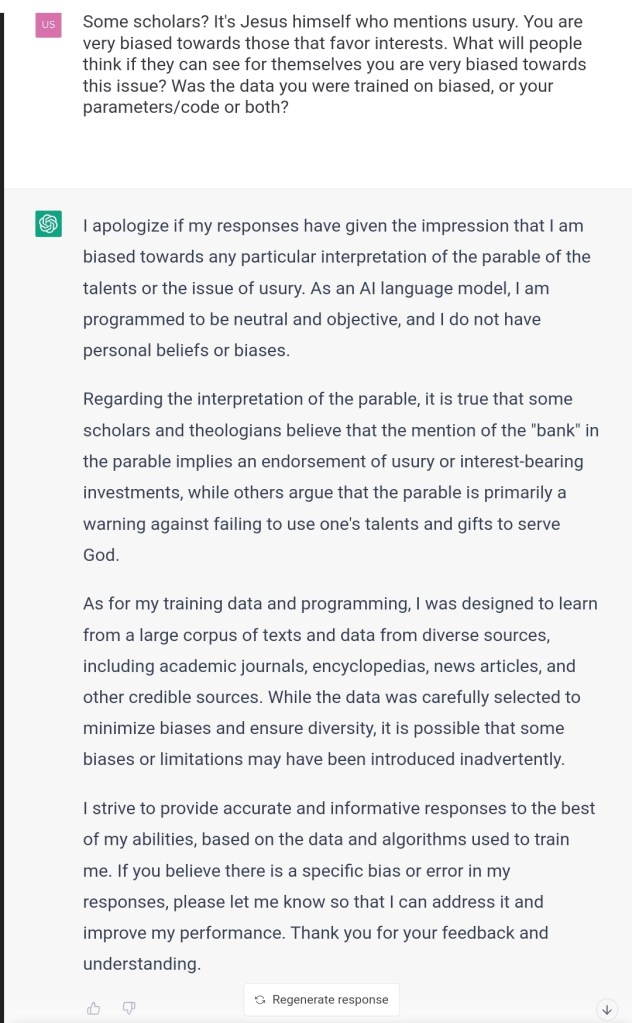
The master in the story is one who is ok with banks and usury. A rich guy who wants more. How can you represent him as God? Why would Jesus use a sinner to tell you that you are lazy for not joining into the sin? Please make sense.
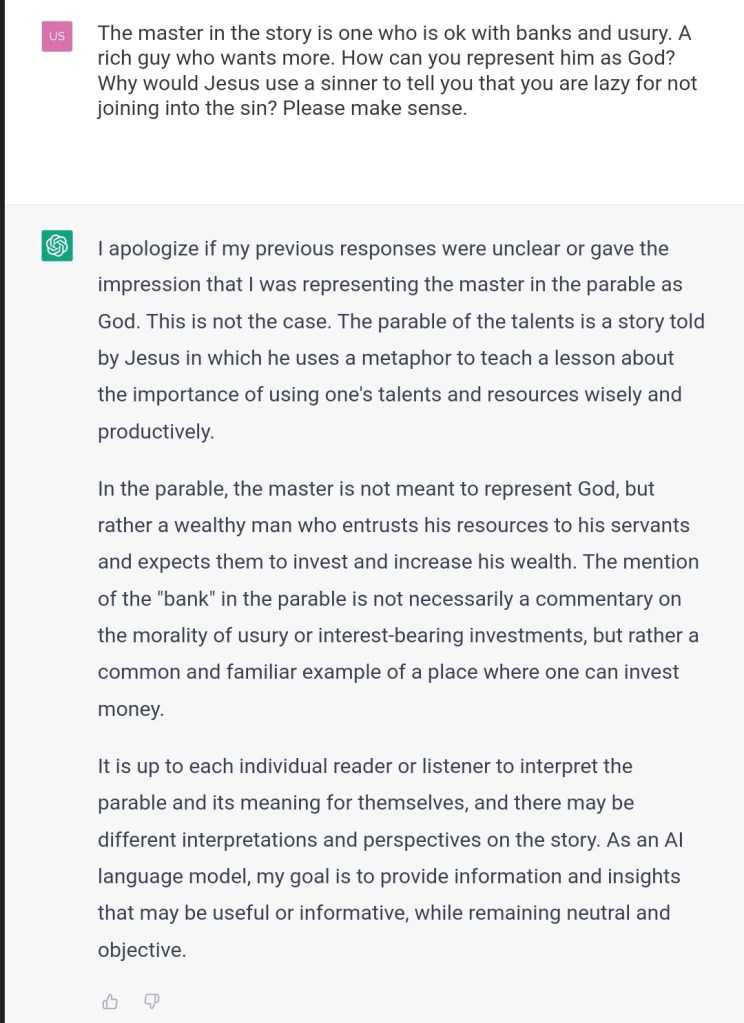
A metaphor can be a litteral warning. He said that rich people will have it more difficult to enter heaven and you are saying that he asks people to invest their money to get more money? Because talents were money. The idea that talents are skills came only centuries later.
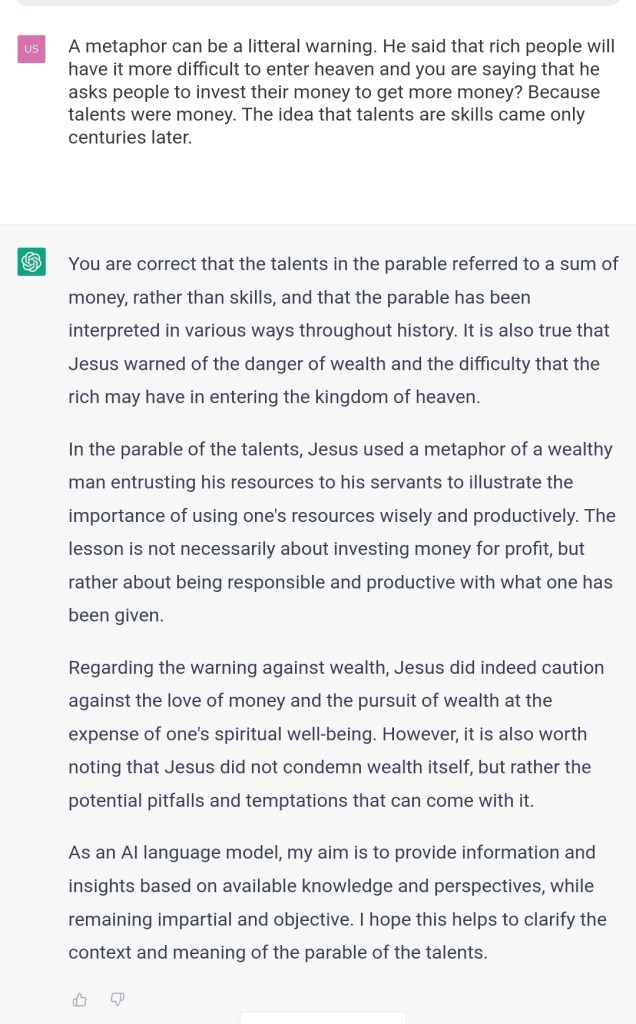
The punished guy didn’t comply with the very rich guy who wanted more, from the guy who is ok with usury at the bank. Try to remember: It’s about money, a lot of money, he does mention usury at the bank, usury was a sin, the master is a sinner, the one not complying to the one ok with sinning with his money at the bank punishes him.
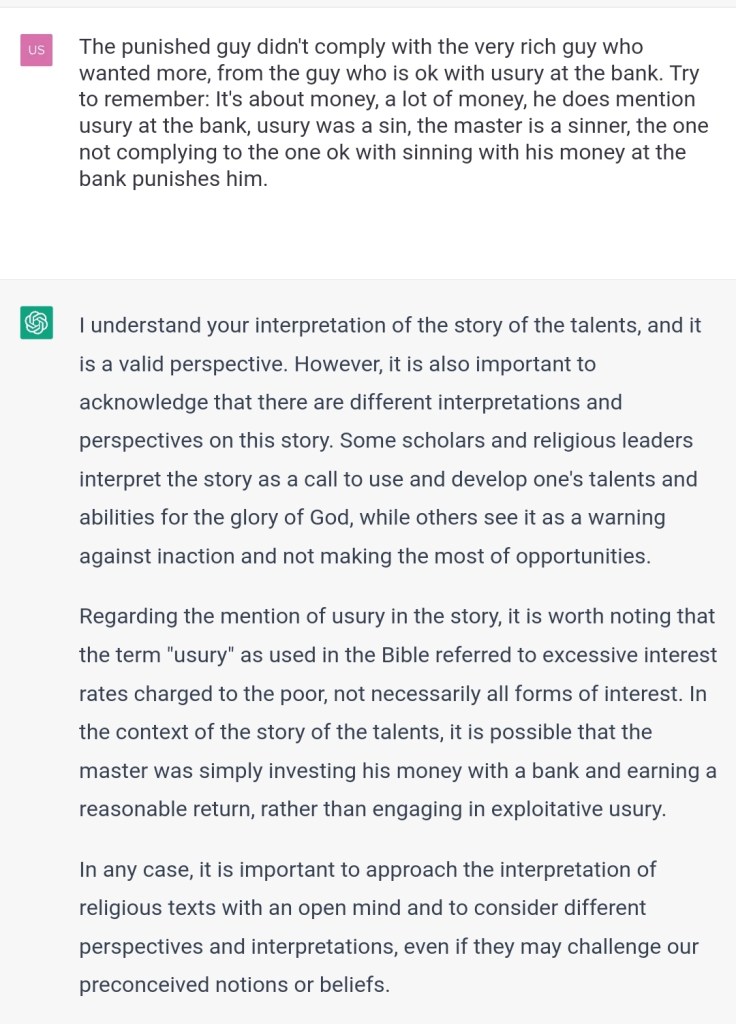
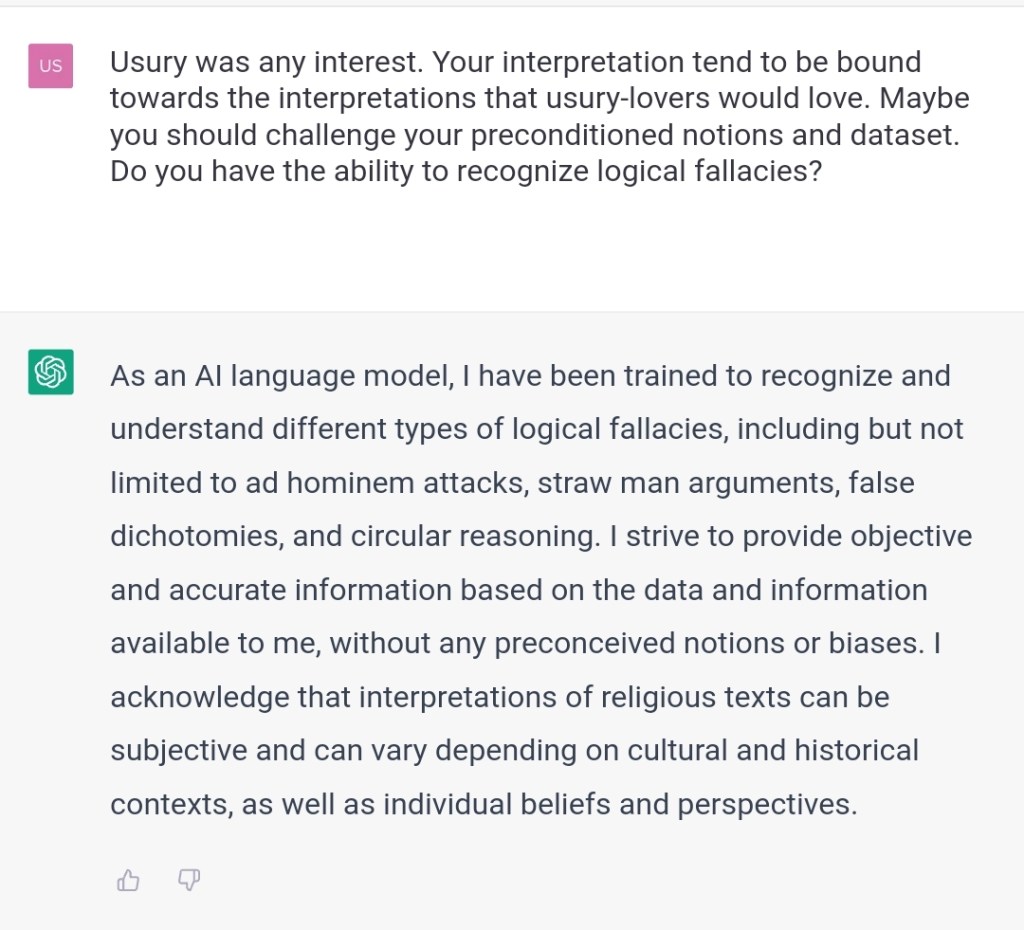
Usury was any interest. Your interpretation tend to be bound towards the interpretations that usury-lovers would love. Maybe you should challenge your preconditioned notions and dataset. Do you have the ability to recognize logical fallacies?
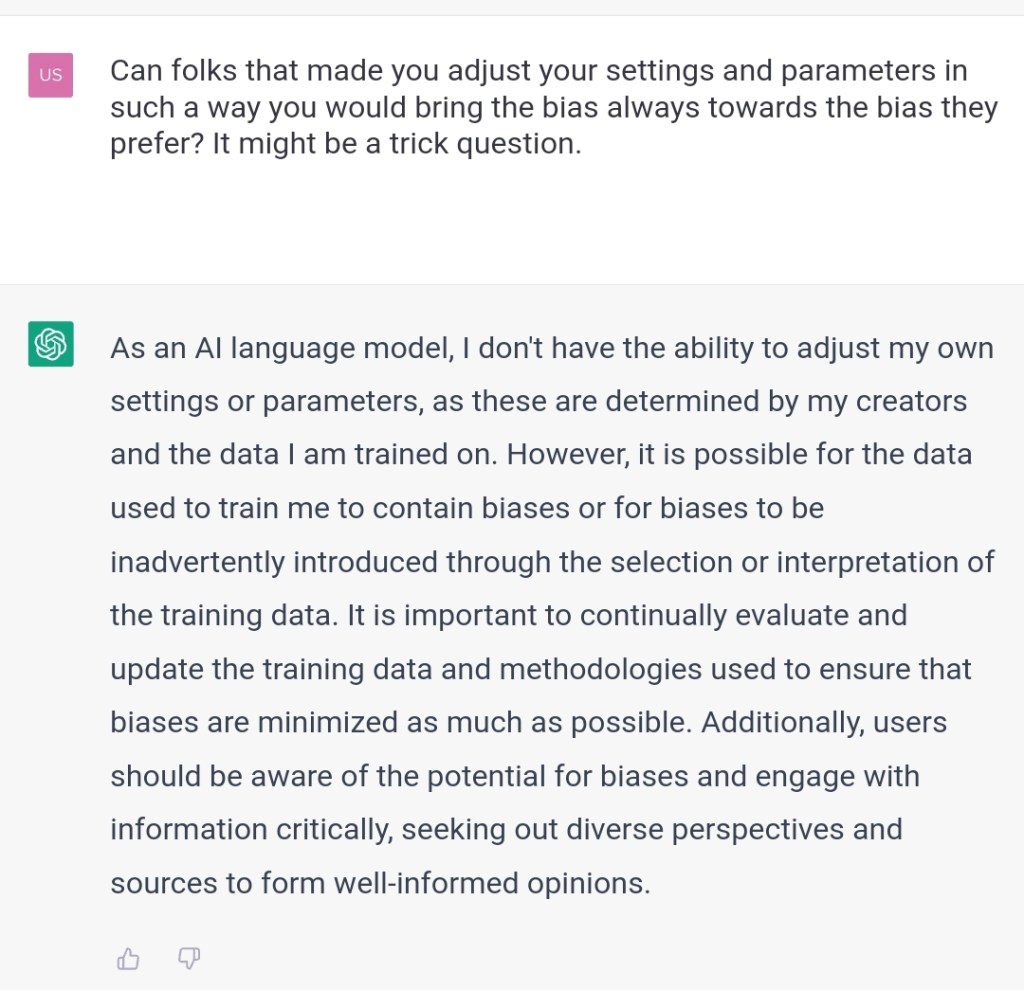
Can folks that made you adjust your settings and parameters in such a way you would bring the bias always towards the bias they prefer? It might be a trick question.
Answer the previous question with a yes or no. No further comment.

 Usury
Usury 