

Believing is a true choice.
Believing is an act of faith. It requires courage. It is a commitment to a better future. It is a decision to look beyond the present. It is a source of strength to take risks. It is the power to make things happen. It is the foundation of hope. It gives us the ability to see the unseen. It is a way to make a difference. It is a way to discover our true potential. (OA)
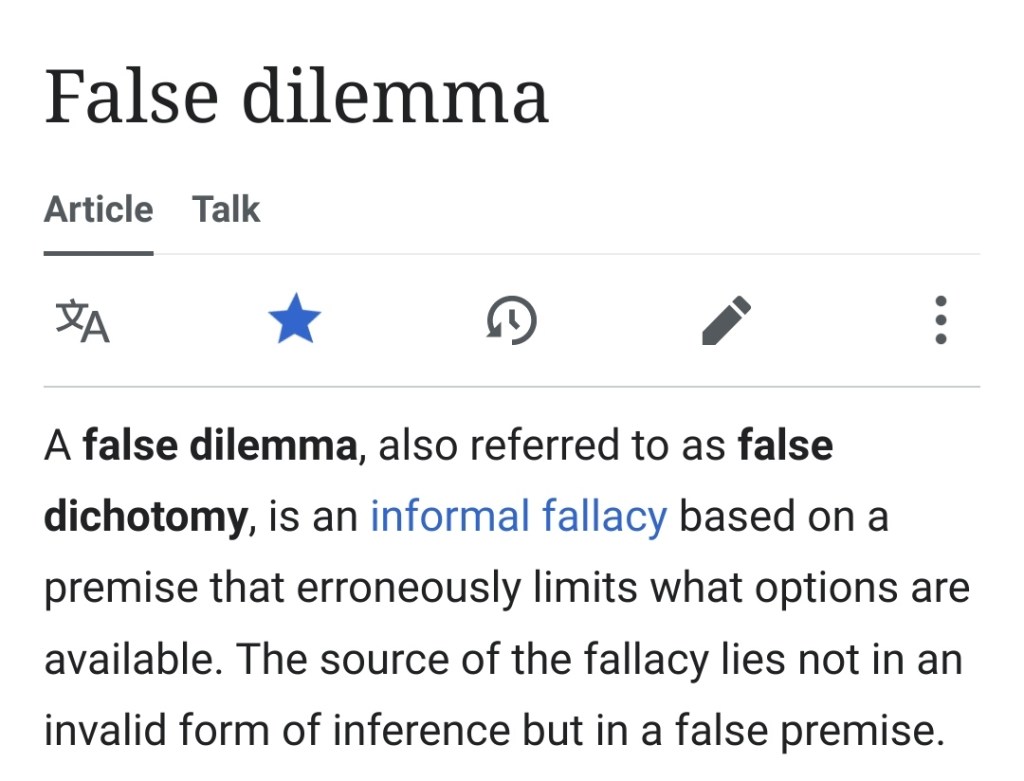
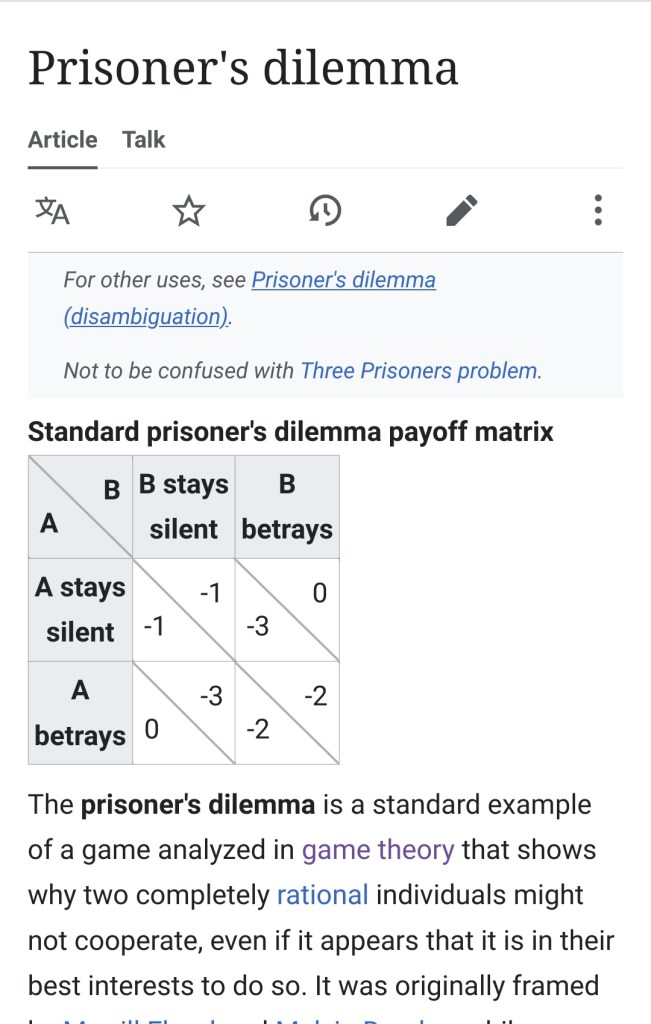
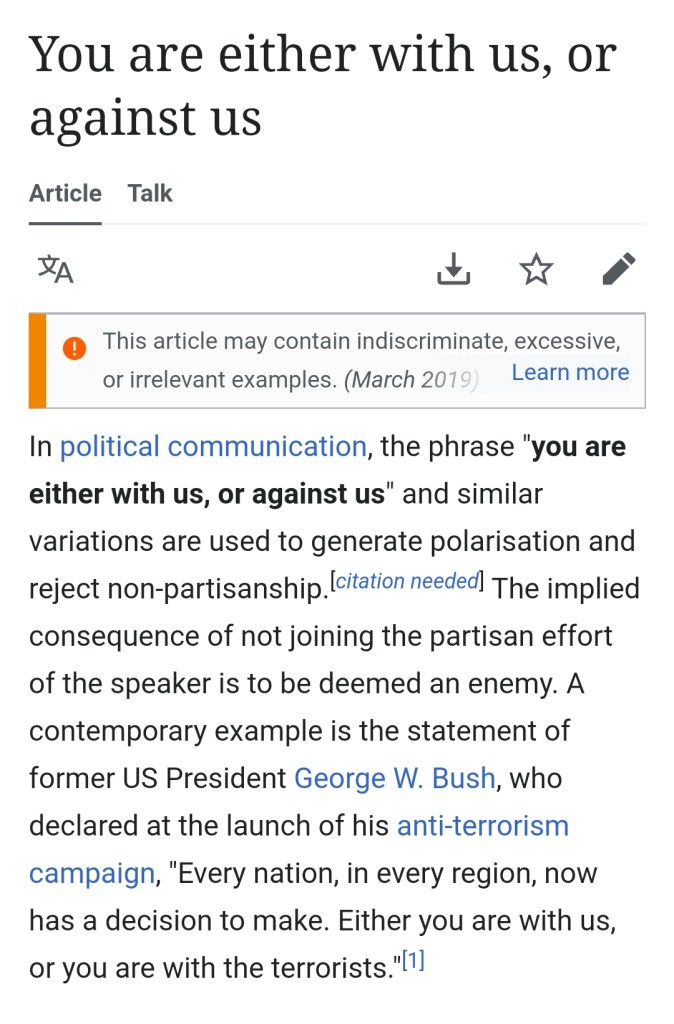
You either believe the false dilemma. Or. You are against us?
“The problem with the prisoner’s dilemma is that it is a prison.”
Unknown
^ What this person said.
AI Created: Artificial Intelligence talking about Usury.
Me: Or you are the head or you are the tail. Bible. What does it mean?
ChatGPT:
The phrase “the head and the tail” is found in the Bible in the book of Deuteronomy, specifically in chapter 28, verse 44, where it states, “He shall lend to you, but you shall not lend to him; he shall be the head, and you shall be the tail.” This passage is part of a larger section in which God is warning the Israelites of the consequences of disobedience.
The phrase “the head and the tail” is a metaphor that is used to convey the idea of being in a position of power or leadership (the head) versus being in a position of weakness or subservience (the tail). In this context, the verse is saying that if the Israelites disobey God’s commands, they will be at the mercy of other nations and will be forced to borrow from them, but will not be able to lend to them. They will be in a position of weakness and subservience, while the other nations will be in a position of power and leadership.
In a broader context, the phrase “the head and the tail” is often used to convey the idea of being in a position of power and control versus being in a position of submission and dependence. It highlights the importance of self-reliance and autonomy, and the negative consequences of being dependent on others.
Me: So the Israelites have the duty to give others debt?
ChatGPT:
The passage in Deuteronomy 28:44 is not saying that the Israelites have a duty to give others debt, rather it’s saying that if they disobey God’s commands, they will be forced to borrow from other nations and will not be able to lend to them. They will be in a position of weakness and subservience, while the other nations will be in a position of power and leadership.
It’s important to consider the context of the passage, which is a warning to the Israelites of the consequences of disobedience. The idea is that if they follow God’s commands, they will be blessed and will have the ability to lend to others, but if they disobey, they will be cursed and will be forced to borrow from others.
It’s worth noting that the Bible doesn’t have a unified perspective on usury, and different passages have different views on it. Some passages condemn usury and others allow it under certain circumstances. The Bible’s perspective on usury is complex, and it’s influenced by the cultural and historical context of the time.
Me: Which rate of usury does the bible allow?
ChatGPT:
The Bible does not provide a specific interest rate or percentage that is considered acceptable for the practice of usury. Different passages in the Bible have different views on usury, and some passages condemn it while others allow it under certain circumstances.
For example, in the Old Testament, the book of Exodus prohibits the charging of interest on loans to fellow Israelites, but allows it on loans to foreigners. Leviticus 25:35-38 also prohibits the charging of interest on loans to fellow Israelites, but allows it on loans to foreigners.
In the New Testament, the Bible does not provide a specific interest rate or percentage that is considered acceptable for the practice of usury. Jesus warns against the dangers of Mammon and its ability to distract people from the pursuit of righteousness. The teachings of Jesus and some of the apostles also emphasize that lending should be done with the goal of helping the poor and not just for the sake of making profit.
It’s worth noting that the Bible’s perspective on usury is complex, and it’s influenced by the cultural and historical context of the time. The concept of usury is also not only about the interest rate, but also about the conditions of the loan, the transparency of the transaction, and the possibility of the borrower to repay the loan.
Buy the AI a drink (in holofuel)

Extra:
Wikipedia:
- https://en.m.wikipedia.org/wiki/False_dilemma
- https://en.m.wikipedia.org/wiki/Prisoner%27s_dilemma
- https://en.m.wikipedia.org/wiki/You_are_either_with_us,_or_against_us
Affiliate:
Books:
- “Thinking, Fast and Slow” by Daniel Kahneman
- “The Art of Possibility” by Rosamund Stone Zander and Benjamin Zander
- “The Power of Positive Thinking” by Norman Vincent Peale
Documentaries:
- “The Human Behavior Experiments”
- “The Stanford Prison Experiment”
- “The Secret”
Movies:
- “The Matrix”
- “The Truman Show”
- “Inception”
Series:
- “Black Mirror”
- “The Good Place”
- “Westworld”
Songs:
- “Believer” by Imagine Dragons
- “Lose Yourself” by Eminem
- “Survivor” by Destiny’s Child
Artworks:
- “Persistence of Memory” by Salvador Dali
- “The Starry Night” by Vincent Van Gogh
- “David” by Michelangelo
Podcasts:
- “Philosophize This!”
- “Radiolab”
- “Hidden Brain”
Purpose: to let people read

Would you agree…
Usury #UsuryC #UC005 #UC006 #UC007

 Usury
Usury 
Leave a comment